
EP 9: Chasing Dreams: James Hopper's Journey From D3 College Tennis to Challengers
Also available on
About this Episode
James Hopper's unconventional path from D3 tennis at Case Western to Division 1 at Virginia and now the professional Futures circuit makes for an inspiring conversation. The episode dives into the financial realities of pro tennis, the mental toughness required when even Federer only wins 54% of points, and practical training and recovery routines that recreational players can learn from.
Key Highlights
James went from 4'11" as a freshman to breaking into Division 1 tennis at Virginia, then making the leap to pro play — a testament to continuous improvement.
Even Federer wins only 53-54% of points — accepting that losing half the points is normal and staying mentally locked regardless is the key.
Mental toughness is the deciding factor at the pro level: everyone can strike the ball, but managing your thoughts in crucial moments wins matches.
Chapters
Click a chapter to jump to that moment
Gerard (00:11): Welcome back to Spin the Racket, the recreational tennis pod covering everything from the pro tour to the everyday league player. I'm your boy, Today we have former Spartan and former Wahoo now turned pro tennis player, James Hopper, joining us on the pod. We're diving into the grind of a college athlete.
Spin The Racket (00:20): In a blue.
Gerard (00:31): and digging into what life is like as he now pursues a pro tennis career. Hop, welcome to the pod.
James Hopper (00:37): Thank you, thank you guys for having me. I'm looking forward to being here.
Gerard (00:40): Yeah, yeah, it was funny. I was thinking about how we met
James Hopper (01:02): PTT at Georgia Grinnell.
Gerard (03:55): Okay.
Spin The Racket (03:58): Hmm.
Gerard (04:12): That's awesome. What drew you to case at first?
James Hopper (04:16): I think honestly, I knew it was a great school. I was going to get a great degree there. Originally the plan was do four years, have fun playing tennis at a high level in Division III, and get a job and move on into the workforce. But ⁓ I think, like I mentioned, Todd got the help and the whole case program, all the guys, the alumni, everything, it nurtures.
Gerard (04:28): Mm-hmm.
James Hopper (04:45): growth and development in all aspects and you know even a year or two into my experience I felt like I was a completely different obviously player but person off-court as well just from the daily sacrifice and stuff that we talked about and you know how to hold ourselves standard too. So yeah.
Gerard (05:08): That's awesome. Yeah, mean, watching you play, your game is super fun to watch. You're really athletic, kind of all around kind of style. You come into the net, you serve in volley. Like, who were your tennis idols growing up? How did you kind of shape the game that you have today?
James Hopper (05:23): Yeah, I would say growing up, I was always, and I think this is like the Brit in me, my favorite player was always Murray. But I loved watching, you know, he wasn't always a fan favorite, you know, had that gritty mentality, always, you know, in the big three or big four, whatever you call it. I think it's the big four to this day still. But, ⁓ you know, those guys, he was always the underdog, always the one that didn't have like the, unless he was at.
Spin The Racket (07:09): Trade blows.
Gerard (07:14): Lou, do you want to interject?
Spin The Racket (07:16): No, I was just saying trade blows, right? Like just trade blows with those guys when you need to. I was going to say it. ⁓ Your your your conundrum there growing up really resonated with me. I ran into the same situation where I played a lot of different things growing up and ⁓ I had to make the decision of when I was like a little bit younger around 12, where it was kind of like kind of that fork in the road, either soccer or tennis and.
James Hopper (07:19): Yeah.
Spin The Racket (07:45): Kind of like you, was like, well, there was a better tennis future. There was ⁓ a soccer future, at least where I grew up. ⁓ So kind of an interesting thing. I love both sports, but ⁓ I will say tennis stole my heart.
James Hopper (08:02): Yeah, yeah, I definitely would say like at the beginning, even though I chose tennis, my favorite sport to watch was still soccer for a long time. I think as I've kind of like gone up levels and, you know, got gained more appreciation, the ins and outs of tennis and like, at a higher level, ⁓ you know, I definitely I love watching tennis now, but it was very much, you know, I chose the sport.
Spin The Racket (08:26): you
James Hopper (08:29): I loved both sports, but it was, you know, like I still had that, the loved the team component and aspect of, you know, going out there for soccer. And, and I think also just, yeah, kind of growing up in England, we would, had season tickets for like Premier League matches every weekend. It was much more kind of ingrained in me, you know, going for a weekend and just watching like soccer, like, you know, going to the stadiums and stuff. And
Gerard (08:53): Mm-hmm.
James Hopper (08:53): it wasn't really as big tennis wise for me, but.
Spin The Racket (09:06): you mentioned that ⁓ it sounds like from what I obviously just getting to know you, but it sounds like you have found like progress.
James Hopper (09:36): Yeah, I think a big part for me is just I love, ⁓ you know, I love competing in every aspect. You know, I'm such a feel like such a strong competitor. And ⁓ at every level that I've played, I felt like I've always, you know, had people to prove wrong. And that for me, you know, being the guy that everyone's like, like, who's he like, what's where's he come from? Who's this guy has always just
Gerard (11:15): Yeah.
James Hopper (11:27): the fire and the juice and me, yes, other guys will as well, but there are certain little points here and there where guys can lose focus or be like, do I really wanna be here? Blah, blah, blah, like, who is this guy? Like, how am I in my third set with you? So I think that has always been kind of an advantage that I've had and I love being the underdog, kind of like I was mentioning with Murray, nobody really.
Gerard (11:52): Yeah.
James Hopper (11:53): you everyone's like, ah, like this guy's, what is this guy doing here? Blah, blah. And then, you know, Max goes on and they're like, oh my, you know, what just happened? Blah, blah, blah. So I think I take, you know, a lot of pride in that. And yeah, for me, like, I just love, love like outworking guys, you know, you you need, sure you need talent, but you also need, you know, to be able to work hard and prove yourself. So.
Gerard (12:19): I love that. I love you got that fire in you, that nature to really stick with it and grind it out. And obviously, yeah, it's done wonders for you and your game. I know you mentioned, obviously, you were at Case for four years. Then you had the additional bonus two years, essentially, eligibility. How did you end up picking Virginia? Did they choose you? Did you choose them? How did that end up?
James Hopper (12:43): Yeah, so I mean, Todd, Todd, will say was like a massive part in my in helping my recruit process. He was the first person to tell me that he wanted me to transfer. You know, I remember having a conversation with him after, you know, after NCA is my sophomore year and we were flying home from Chattanooga and he was like, look, like you're most likely going to you're definitely going to get one. You might get two years. ⁓ I think by that time you end here, you're going to be in a place where
Gerard (14:59): Yeah, that's pretty cool. Yeah, obviously, Virginia has an amazing tennis program, as you listed out. A lot of big wins, especially recently. What was it like for you as you look back at six years, essentially, of college tennis? Two different schools, two different coaches and teams. How was that experience for you just overall?
James Hopper (15:17): Yeah, I mean, I think I was very grateful. I feel like I got the best of both worlds. I went somewhere for four years where, you know, I played one singles, one doubles, you know, was getting all the match reps as I needed, got the confidence, got the experience. And then, you know, four years playing every match, I go to Virginia my first year and all of a sudden, you know, I'm not like the guy there. And now it's like, I got to prove myself for this lineup. And I think.
Gerard (16:42): Awesome. And obviously, we met, like I said, a few years back, you were in school, starting to play some of these tournaments. Help us understand, what's that switch that gets flipped to where you start playing more of these ITF and pro tournaments? Take us through that path of where you're going now to playing on the ATP.
James Hopper (17:04): Yes, I mean, I think while I was in school, because of kind of the position where I was, where I was, you know, trying to just put my name out there, ⁓ you know, get recognition and like kind of the transfer process my last couple of years. I think for me, the priority was just getting matches and a ton of matches in under my belt. And I think ⁓ I wasn't necessarily at a level where if I did a summer of just like
Gerard (19:15): That's cool. Yeah, and I know you're a pretty humble guy, but you've already had some good success, too, on the Challenger Tour. I know I've seen you in a few doubles titles recently. Is that right?
James Hopper (19:25): Yeah, this was a good summer of starting. I won three ITF futures doubles. you know, obviously just again, like trying to stay in the moment, but it is nice to get, you know, some wins under the belt, especially first summer starting out. ⁓ You know, it's good for confidence and stuff, but you know, obviously I have bigger goals than winning. winning like
Gerard (19:34): That's awesome.
James Hopper (19:53): futures tournaments so I'm just kind of using it to you know kind of keep obviously keep my head down keep going you know you have to stop and look around a little while you're going and enjoy it but ⁓ yeah I obviously kind of have some bigger goals for myself and hope hope to be playing higher levels.
Gerard (20:02): Mm-hmm.
James Hopper (20:24): Yeah, so it's very flexible. ⁓ But as of now, I'm pretty much basing myself out of UVA. ⁓ I can use all the coaches there, hit with the guys there, ⁓ use the facilities, which is an incredible setup. I think it's the closest. Staying East Coast, kind of where I grew up always, it's nice to be still somewhat close ⁓ to home with my parents. And then it's
Spin The Racket (20:54): Yeah.
Gerard (20:55): Yeah.
Spin The Racket (21:18): .
James Hopper (21:20): ⁓ You know with the coaches and the guys there ⁓ as a great base for me to you know continue continue just Working and staying healthy staying
Gerard (21:31): Yeah, and you talked about being super driven, super focused on your goals.
Spin The Racket (21:46): Yeah, we
James Hopper (21:48): Yeah, so sorry, I
Gerard (23:42): That makes sense. It's probably a fine line between practicing enough to where you feel confident and ready for a tournament versus overdoing it and wearing out your body too much.
Spin The Racket (23:53): Yeah, diminishing returns. feel like you find that strike that balance between like efficiency and productivity versus like just getting out there because you think you need to get out there and you think you need the reps, but it's like, you know, every rep fully focused, it means a little bit more than, ⁓ than just going on there and do spending the time, right? It depends on how you quantify your work. sweet dude.
James Hopper (24:16): Yeah, yeah, no, exactly, exactly.
Spin The Racket (24:20): I mean, shoot, this sounds like this week. kind of did the same thing, but my body's definitely feeling it. Obviously not a pro, but Jesus Christ. I'll play tennis, what, five days this week? Four or five days? ⁓ Say what? Yeah, man.
Gerard (24:33): Yeah, you're grinding. You're grinding out there.
Spin The Racket (24:37): You know, but the body's definitely feeling it. I understand that, James. Like, yeah, my knees are hurting. Like, I was telling G, like, yeah, I mean, she probably hit today. But then it's like, you know what? Maybe I should take it easy. Then I went to the gym to do a recovery session. Turned out ⁓ I did a little bit more than that. the body wanted it.
James Hopper (24:56): Yeah, I I
Spin The Racket (26:38): It's your one tool, right? You only got
James Hopper (27:31): Yup, definitely. Definitely.
Gerard (27:34): Yeah. I'm curious if you're using technology in any way to kind of help with some of that. I there's the whoop and the oar rings. I see players wear heart monitors and things like that. How do you use tech to help with either recovery or fitness?
James Hopper (27:49): I haven't really, I've thought about getting into WOOP. think if I were to, I would do that. ⁓ I think that's something I'm definitely gonna look into maybe towards the end of the year, just to kind of get more feedback and stuff. I think, kind of like I was saying, I know how my body feels and reacts to certain things, so I feel like I have a pretty good.
Spin The Racket (28:04): .
James Hopper (28:15): um, you know, understanding of that and what I need to kind of focus on, but I think I could definitely see myself, um, you know, getting in, getting into the whoop or I don't think I'd get like an Apple watch or a heart rate monitor
Spin The Racket (28:30): That's more for encouragement. It's really interesting how they market these products to different people. Your Fitbit and Apple Watch are more to encourage people to move. I personally think that I'm a whoop user. So I personally think that ⁓ the whoop's a little bit more for the people that tend to err on the other side of the spectrum and overtrain. Long story short, I was recommended whoop by a buddy of mine that went to a D1 school for golf.
James Hopper (29:35): Yeah.
Spin The Racket (29:58): I'd say I'm definitely healthier because of it.
James Hopper (29:58): Awesome, yeah.
Gerard (30:37): let us know, add you to our little whoop tennis group we have going on. ⁓
Spin The Racket (30:41): Yeah, it's a friendly competition.
James Hopper (30:43): Yeah, well...
Spin The Racket (30:46): Yeah, you're probably, you know, kick our butts, but ⁓ no, it's cool. I mean, there's obviously a community aspect to it. I would say I don't take full advantage of it, but
James Hopper (31:51): Yeah, so I think, ⁓ you know, obviously I have, you know, a good stretching routine that I do pretty much every day post-workout tennis. Yeah, I have like a routine that I'll go through. ⁓ So I have that, it's like 15-20 minutes, and then I have a pair of ⁓ like the Normatec, the portable Normatec sleeves. So those help the legs.
Spin The Racket (32:01): It's the same one.
James Hopper (32:20): tasks, the arms, I can pretty much strap them on anywhere and I get a good amount of relief from that. And then if I can find, you know, on the road, if I can find an ice tub, like cold plunge, whatever I can do, I think that helps my body a lot. But usually it'll be, you know, in a competition week, let's say I get off court from a match, I'll go to the gym, stretch out, then I'll go shower and then...
Spin The Racket (33:19): That's huge.
James Hopper (34:19): I think where I kind of am currently, the Futures Tour is pretty much just very similar to college, at least level-wise. Obviously, you're out there alone. You don't have a whole team behind you. But level-wise, it's pretty similar. ⁓ My first summer, I haven't really experienced anything. ⁓
Spin The Racket (34:55): Hmm.
James Hopper (35:13): You're no longer traveling with an entire staff, a group of guys, all these places. You're out there alone like junior tennis. ⁓ So I think just being able to kind of shut off everything in the external environment and just go out there for yourself is the biggest transition, kind of getting back into that swing. ⁓ But level-wise, don't think it's anything drastic. ⁓
Spin The Racket (36:15): What's something that people underestimate about the grind of professional tennis?
James Hopper (36:22): I mean, I think it's again, just like, it's one of the few sports that you're truly out there completely alone. And I think, ⁓ you know, some of these futures tournaments are in the middle of nowhere in these little back alleys of the world, back corners of the world. And ⁓ you obviously have like pocket of guys that'll travel ⁓ in groups or with coaches, but if you don't have that. ⁓
Gerard (38:11): Yeah.
James Hopper (38:15): is more nails and can show up and execute their game plan at, you know, six all in the third set tiebreaker after being out there for three and a half hours. Like who's going to have the mental capacity and focus to not play one sloppy point that could be causing the outcome of a three and a half hour match. So I think as you go up in the levels, you know, it comes more and more down to that mental side of things and less about.
Spin The Racket (38:29): Yeah.
James Hopper (38:44): you know, who can strike the ball better. You can play lights out for a set and three quarters and then mentally go away and the other guy's stuck in it and he can, you know, easily flip the switch and the whole match, like the whole match can just turn on its head. So, you you gotta, you gotta be locked and dialed for, you know, from first point to last and, you know, just stay out there as long as possible.
Spin The Racket (39:11): Yeah, I mean, I get it. Obviously, lot of mental fortitude needed. From a practical standpoint, how do you handle pressure and setbacks? Let's say just a tough loss or something like that. How do you deal with that?
Gerard (39:15): That's.
James Hopper (39:28): Yeah, I mean, I'm obviously very competitive, so I hate to lose. like, and obviously, like the closer the match, the harder it hurts, the more it hurts. But I will say, you know, obviously, like after tough loss that night, I'm going to be pretty, you know, not down, but you know, pissed I couldn't win or, you know, upset, you know, a couple of things just that I could have done differently. And then
Spin The Racket (41:41): Yeah, it's crazy. It's abysmal, statistically speaking.
James Hopper (41:58): had a put away volley on top of the net and somehow found a way to miss and lose the point. Like who's gonna do a better job of being like, okay, that's just one of the 50%. Like I gotta get, you you never know which can be the turning point or the deciding point in a match. So I think, you know, just being able to accept ⁓ losing 50 % of the points on average is, has been a massive thing for me.
Gerard (42:14): Yeah.
James Hopper (43:11): Yeah, I think the emotional side of it, I think I've always wanted to travel the world. So I think I love the travel aspect of it. I see like this summer, for instance, I was in Korea, Tunisia, Serbia, like places I never would have thought I would be going and I'm getting there to play a sport for a living. think ⁓ seeing all these different cultures when you're out and about.
Gerard (43:32): Yeah.
James Hopper (43:40): is really fascinating for me. I think that that's a part of it where I'm lucky. You know, if you don't like to travel and you can't handle the lifestyle, then you're not going to be able to do it at the highest level because, you have to love to travel. You have to love to see different things being on the road. So I think I've always always wanted to do that. So it's, you know, the perfect avenue and excuse for me to see corners, places in the world that I never could have imagined.
Spin The Racket (44:40): Reassess.
James Hopper (45:09): I think that's a massive part of it. Having that financial freedom out there is huge because you have so many guys that, you know, don't have sponsors, don't have the funding, don't have the backing. And then it's like, okay, like I got to get to this round and even come close to breaking even this week. And you just can't like there's too many good players out there. You can't have that like at all. Like you need to go out there and just play. So
Spin The Racket (45:32): Hanging over your head. Yeah.
James Hopper (45:35): I think I'm very lucky and grateful to be in a situation like that. And ⁓ it makes it easy that I'm like, okay, I have, there's no rush again. comes even back into my body, listening to my body. Like I know I have X amount of time. I don't need to rush it. I don't need to like rush to get back out on court to get points and get my ranking high. Like I don't feel any of that. think just, you know, going about it the right way, taking care of my body, taking care of things on court.
Gerard (45:51): Yeah.
James Hopper (46:05): you know, the results will come. ⁓ If I take care of everything else, check every other box. So I think that's a big thing for me. And it's also a massive part of just playing free out there because so many guys don't have that luxury when it comes to, I mean, a lot of people do have sponsors and people backing them. Like you have to, in order to break through the futures and challenge your level, it's...
Gerard (46:28): Right.
James Hopper (46:32): if you don't have that funding and backing. So I think, you know, it's a massive part of it, but, you know, just very grateful to be out there, you know, financially and emotionally free, just with everything. So yeah.
Gerard (46:47): Yeah, I was curious about that, like on the financials. do you have to pay to play in these tournaments? And do the tournaments typically at least cover your strings for your rackets or like transportation or stuff like that? Who does it fall on? Does it always fall on the player for a lot of these expenses?
James Hopper (47:04): Yeah, majority is all players taking all the expenses. I think, you know, as you get more up to like the challenger level, they'll start like covering hotels a little bit for you. ⁓ But and like transportation from like tournament hotel to the site. ⁓ And you still see that at the futures level. But, ⁓ you know, you'll get like discounted rates for hotels and stuff pretty much like equipment wise, unless you're getting direct sponsorship from
Gerard (48:28): Yeah.
James Hopper (48:32): It's tough, you know, starting out, but ⁓ I do think the money is slowly trickling down. I think, you know, every year the prize money gets better, you know, singles and doubles, obviously at the ATP level, but even at the challenger level. So I think it's trickling down slowly, but, you know, you got to get to a certain point to make it ⁓ profitable and stay out there.
Gerard (49:00): Is there kind of a cohort of guys, I know you mentioned for example, like Rafa, I think you mentioned maybe he in the same tournament as you or something like that. Are there other guys who also trying to make it and get there that you kind of have a little bit of a pairing with where it's like, we have community, have shared experience and trying to get on tour together. Do you have any of that camaraderie or is it kind of, you truly by yourself right now?
James Hopper (49:24): I think it's like a little bit of a mix. At least like at Virginia, I was the only guy that graduated last year. So, you know, as of like in my base, I mean, I don't really even consider myself feeling alone because there's guys that are like on the team that are there, you know, in school playing, but their plans are to play after school as well. So, you know, it's that same mindset there. And then I think just like,
Gerard (50:54): Yeah, for sure.
Spin The Racket (50:55): Yeah. You've obviously already alluded to a lot of this and you've given us really good nuggets through, you know, answering a lot of the questions that we had. ⁓ But you already talked about, you know, at the home base playing with guys that already kind of looking to seek that same trajectory that you're going in. What advice would you give to juniors or college players who dream of going pro?
James Hopper (51:23): I think, I honestly think, and I think I have a very unique pathway in this that, you know, if you just focus on sharpening something every single day, getting a little bit better, you know, whether it's on-core, off-core, mentally, when you put, you know, the accumulation of that over like one, two, three, four, five, six, however many years, like you're gonna see.
Spin The Racket (53:38): Yeah, no, I've always heard the quote that people underestimate. They overestimate what they can do in a day and they underestimate what they can do in a year. ⁓ And, you know, it's compounded interest of effort, right? I think I'm resonating a lot here. I'm hearing growth mindset. I'm hearing focusing on the process, not on the results. ⁓ I'm hearing, you know, get 1 % better every day.
James Hopper (54:16): Yeah.
Spin The Racket (54:31): We were just curious, like, what do you see yourself in the next, let's say, two to five years? I know you've kind of set two years as that mark for, like, the reassessment. What are some goals that you have for yourself?
James Hopper (54:44): I mean, I think I definitely want to I don't know. think I think a big goal of mine is also not putting like literally not even putting a number on it and not looking at ranking, not looking at points, just going out there playing, you know, playing with the intention to win. So ⁓ like that side of things, like I really I really don't have ⁓ any expectations for me.
Spin The Racket (56:13): Deep
James Hopper (56:13): You know, realistically
Gerard (56:53): Yeah. ⁓
James Hopper (57:06): At the futures level, win three or, you know, let's say you win two or three tournaments in a five, six-week stretch. You're almost knocking on getting into challenges every week then. So then it's like, you do the same at a challenger. You win three out of five weeks. That's very tough to do at the challenger level, but same thing. You get on a run, you're playing with momentum. You win a couple of challengers, you're knocking on top.
Gerard (57:47): Yep.
James Hopper (58:02): Just kind of going into it, throwing everything at it is a big goal.
Spin The Racket (58:08): That's cool. I think you kind of tied it back to how this is, you know, not like college and pretty much year round. So those five to six weeks you're talking about could be any time, right? It's not like, it has to happen this time specifically or in this particular moment. Like at any given point, you could just go on a deep run for five, six weeks and boom, just pop. So no, that's cool, man. I like tying it.
James Hopper (58:30): up.
Spin The Racket (58:33): to the actual work rather than like the outcome. Again, just same mentality, ⁓ right? We're gonna move into ⁓ the section that I mentioned at the beginning that we're calling quick hands for the time being. This is obviously, you say you're confident in your doubles game, so we expect you to have the quickest hands here. ⁓ We're gonna ask you questions, give you two to three seconds to answer and then you're gonna explain to us why that is. Sound good?
James Hopper (59:03): Sounds good. Let's do it.
Spin The Racket (59:04): All
James Hopper (59:15): No forehand.
Spin The Racket (59:17): Why's that?
James Hopper (59:19): I think you can, the serve and the return are the biggest weapons to have. You know, I think there's the average shot length of a point is like two point or like, I think it's anywhere from like 1.5 to like 2.4, like on the men's side of the game, which is like serve return, most of the point, like over 50 % of the points are done. So.
Gerard (59:40): Wow.
James Hopper (59:47): I think having a serve as a weapon is massive in today's game. I think you can work around not having an explosive forehand. think, you know, so many guys out there, can be crafty in points, find ways to win points, but the serve and return are massive, in my opinion.
Gerard (1:00:06): That was my answer too.
Spin The Racket (1:00:07): Yeah, yeah, your team Gerard, I see that.
James Hopper (1:00:27): I mean, best as in my favorite or best as in most enjoyable, best as in is very arbitrary, I'm guessing. I'd say hard. I think I've grown up playing on hard. ⁓ Most of the case, I think I really want to get on grass a little bit more. I have loved every time I've played on grass. ⁓ And there's also...
Spin The Racket (1:00:33): whatever you consider to be the best.
James Hopper (1:00:54): ⁓ special niche to indoor carpet, I think is a very unique surface where it's just something you like never see. So like I think you'll go places and see like some crazy surfaces, courts in great condition, courts in terrible conditions. ⁓ but yeah, I'd probably say I'd say hard.
Spin The Racket (1:01:14): Third question, if you could have any brand sponsor you who would it be?
James Hopper (1:01:24): Probably head. I've always been a head-racket-sky and I think the equipment's the massive part of it. It doesn't matter what clothes I wear. I don't think that's a big part, but I think, yeah, head. Definitely head.
Gerard (1:01:27): OK.
Spin The Racket (1:01:39): Nice.
James Hopper (1:01:41): I'm using the Speed Pro.
Spin The Racket (1:01:44): dude, yeah you want to... Which one? Like this one?
James Hopper (1:01:51): No, I have. I'll grab it really quickly.
Spin The Racket (1:01:55): Is that the newer one? Yeah, the ecstatic one duty ideas. It's the matted out like exotic one. See, I didn't. I didn't love that one. I like the older version.
James Hopper (1:01:57): Yeah.
Spin The Racket (1:02:22): Yeah, dude that thing literally like especially at the volleys like once it hits the the pocket it just like shoots down in my opinion it just like It just kills the ball
James Hopper (1:02:44): in my eyes fed.
Gerard (1:03:14): Yeah.
James Hopper (1:03:17): ⁓ But like in feds prime, like no matter who you were, he was just taking the racket out of your hand, like floating around the court effortless, just complete, fully complete game. I really think in my eyes, I think it's.
Spin The Racket (1:03:38): No one's going to play the game like he did. That's just it. We got to witness greatness. And then now it's like, dude, I cried when you retired. ⁓ Who's your dream doubles player on tour right now?
James Hopper (1:03:53): Ooh, that's a tough one. There's a lot. I know this is supposed to be rapid, but so many names are flying through my head right now. I mean, on the side of like singles or doubles, think like having a guy like Carlos would be insane. The guy's got magic hands.
Spin The Racket (1:03:57): You
James Hopper (1:04:16): Great serve. If I go at net, he's like already back on the other side. If like I miss it, like just like core coverage, that would be cool. But then, I mean, you have so many, so many athletic guys at the top of the doubles tour. think, I mean, I can't, I can't even really choose one. There's so many that, that I could play dubs with, but I'd say, yeah.
Gerard (1:04:23): Yeah.
James Hopper (1:04:37): I mean, I was thinking maybe you go with a guy like Riley O'Pelka and like guarantee hold every single game, but you know, at the top level, guys can return. So, you know, not necessarily the top guy you'd want ⁓ at net. So I think overall it's pretty safe to say.
Gerard (1:04:42): Yeah, exactly.
Spin The Racket (1:04:42): Yeah
Gerard (1:04:53): Right. ⁓
Spin The Racket (1:04:58): Alright.
James Hopper (1:05:15): Wimbledon once.
Spin The Racket (1:06:01): Yeah, yeah, that's true. You're engraved in history.
James Hopper (1:06:25): Yeah, so as of now, obviously just like focusing on getting healthy. I was supposed to play this week and next week, but ⁓ now it's just, you know, full recovery. think the earliest my next tournament would be is a 25K in Oklahoma, which is starts 20th of October. So like three weeks. ⁓ And then
Gerard (1:07:35): That's sick.
James Hopper (1:08:00): No.
Spin The Racket (1:08:04): Yeah,
James Hopper (1:08:06): No, thank you. Yeah. It'll be, it's exciting. It's very exciting to kind of think about and just being able to like travel the world, play
Gerard (1:08:07): day
James Hopper (1:08:15): tournaments, know, experience different cultures. For me, that's definitely obviously the tennis part of it is key. But for me, that side of things, enjoying the lifestyle is a massive part of it as
Gerard (1:08:26): Yeah.
Spin The Racket (1:08:28): That's great. mean,
Gerard (1:08:28): That's awesome.
Spin The Racket (1:08:29): that's going to keep you mentally there as well, right? And not be a detractor when you're on court. maybe that could have the power of be a detractor on the court. Now, where can people find you? Any socials? Any tournament updates?
James Hopper (1:08:47): Yeah, I think just the biggest is just Instagram is probably the best, most updated for where I'm at, whether it's or like results and stuff is probably my Instagram, ⁓ at JDHOP99.
Spin The Racket (1:09:03): Yeah, we're gonna be we'll add you to collab with a lot of these and we'll tag you make sure people can follow the the journey so Yeah, I mean with that I mean just want to say James. Thank you so much for joining It's been a pleasure obviously understanding the journey What's you know the trajectory all the work that's gone into getting you here and that will power you into what's next for you
James Hopper (1:09:10): awesome.
Spin The Racket (1:09:29): So I
James Hopper (1:09:41): Awesome. Well, no, thank you guys for having me. It's been a good time, a lot of fun. So yeah, appreciate it.
Spin The Racket (1:09:47): I'm Lou. Thanks for
You Might Also Like

EP 21 - Breaking Stereotypes: Jonathyn Young (XXL Tennis) & His Journey to Inspire
Guest: Jonathyn Young
EP 19 - Covering Fitness, Diet, and Aging with Edin Sehovic from Evidence Nutrition
Guest: Edin Sehovic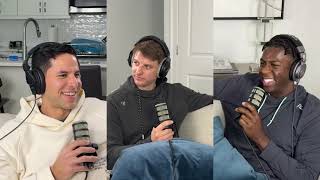
EP 17 - Australian Open 2026 Recap & Highlights with Nic Howe
Guest: Nic HoweStay in the Game
ALTA & USTA updates, Atlanta tennis news, episode highlights, and Beyond The Racket stories — delivered to your inbox.